
Running a small business often means handling multiple responsibilities at the same time. From managing customer support and marketing to tracking inventory and replying to emails, business owners spend a large part of their day on repetitive tasks. While these tasks are necessary, they can also slow growth and reduce productivity. This is where artificial intelligence is changing the way modern businesses operate. AI is no longer limited to large corporations with massive budgets. Today, small businesses can also use AI tools to automate daily operations, save time, reduce costs, and improve customer experiences.
The rise of affordable AI platforms has made automation easier than ever. Whether it is generating marketing content, organizing customer data, handling customer support, or managing finances, AI can simplify complex processes in a way that allows small business owners to focus on growth and strategy instead of routine work. Businesses that adopt AI early are finding new ways to compete in crowded markets while improving efficiency at every level.
Understanding AI Automation for Small Businesses
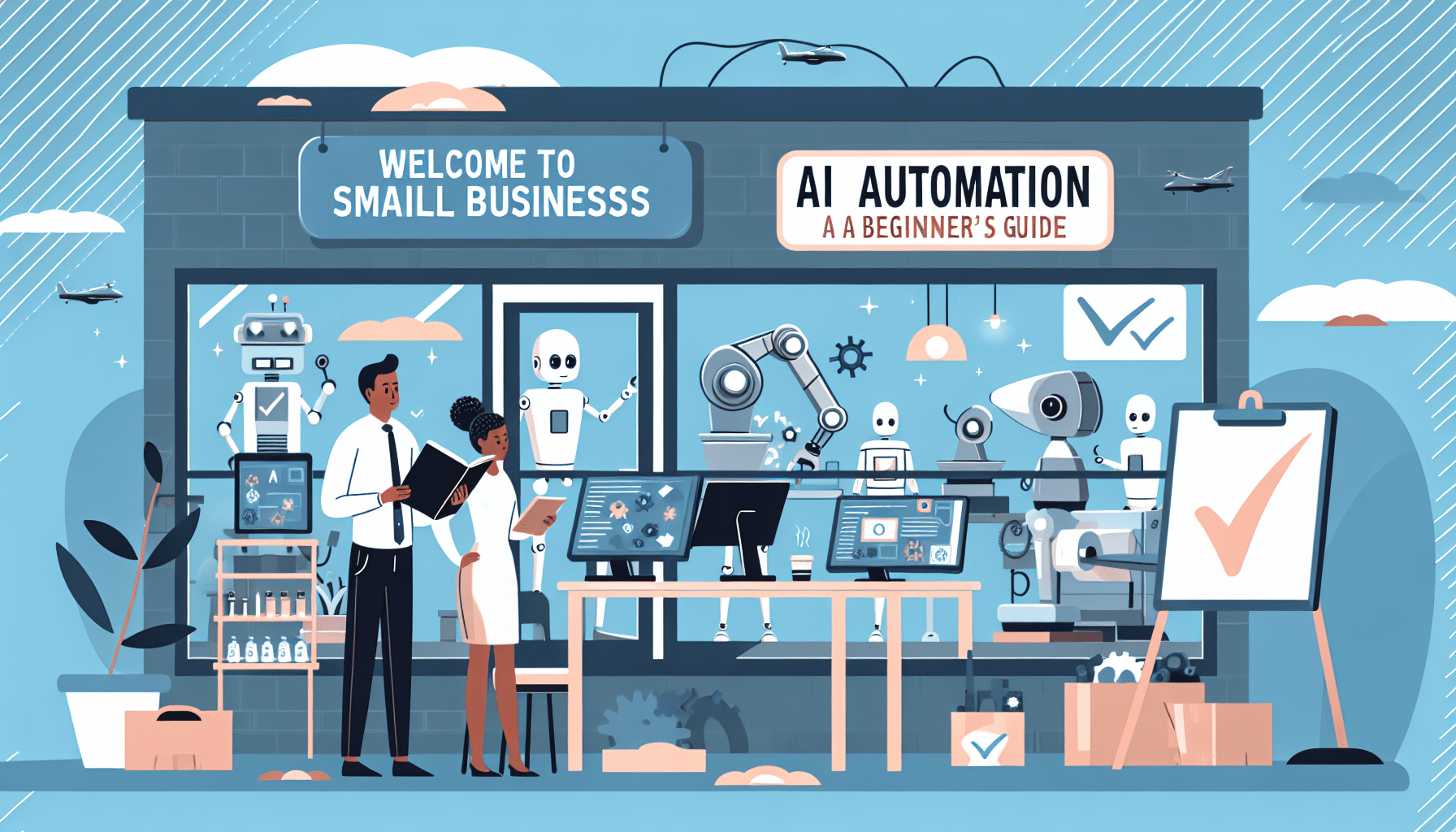
AI automation refers to using artificial intelligence tools and software to complete tasks that would normally require manual effort. Unlike traditional automation, AI systems can learn from data, recognize patterns, and make decisions with minimal human involvement. This makes AI much more flexible and intelligent compared to older automation systems.
For small businesses, AI automation can be used in many areas such as customer service, content creation, sales tracking, scheduling, accounting, email marketing, and inventory management. The goal is not to replace employees but to reduce repetitive work so teams can spend more time on creative and strategic activities. A small business owner who once spent hours replying to emails or creating social media posts can now complete those tasks within minutes using AI tools.
One of the biggest advantages of AI is accessibility. Many AI platforms are cloud-based and available through monthly subscriptions, which means small businesses do not need expensive infrastructure or technical expertise to get started. Even businesses with limited budgets can benefit from automation tools designed specifically for startups and small companies.
Automating Customer Support With AI
Customer support is one of the most time-consuming parts of running a business. Customers expect quick responses, instant solutions, and support at all hours. For small businesses with limited staff, meeting these expectations can be difficult. AI-powered chatbots and virtual assistants have become a practical solution for this challenge.
AI chatbots can answer common customer questions instantly without requiring human intervention. They can provide order updates, explain products, help customers book appointments, and even process simple requests. This allows businesses to offer support 24/7 while reducing the workload on customer service teams.
Another advantage of AI customer support systems is their ability to learn from conversations. Over time, AI tools become better at understanding customer queries and delivering accurate responses. This improves customer satisfaction and creates a smoother support experience. Small businesses can also use AI tools to analyze customer conversations and identify common issues, helping them improve products or services.
For example, an online clothing store can use AI chatbots to answer questions about shipping times, return policies, and product availability. Instead of manually responding to hundreds of similar messages every day, the business owner can let AI handle those interactions automatically.
Using AI for Marketing Automation

Marketing is essential for business growth, but creating consistent content and campaigns takes time. AI marketing tools can simplify this process by automating content creation, email marketing, social media management, and advertising campaigns.
AI writing tools can generate blog posts, product descriptions, ad copy, email newsletters, and social media captions within minutes. This helps small businesses maintain a strong online presence without hiring large content teams. AI can also personalize marketing messages based on customer behavior, increasing engagement and conversion rates.
Email marketing platforms powered by AI can automatically send personalized emails to customers based on their interests or previous purchases. For instance, if a customer abandons their shopping cart, AI systems can send reminder emails encouraging them to complete the purchase. These automated campaigns help businesses increase sales while saving time.
Social media management also becomes easier with AI. Many AI tools can schedule posts, suggest hashtags, generate captions, and analyze audience engagement. Small businesses can maintain active social profiles without spending hours online every day.
AI advertising platforms are also improving digital marketing strategies. These systems can analyze audience behavior and automatically optimize ad campaigns for better performance. This helps businesses achieve better results with smaller advertising budgets.
Streamlining Administrative Tasks
Administrative work may not directly generate revenue, but it is necessary for keeping a business organized. Tasks such as scheduling meetings, managing calendars, organizing files, and responding to emails can consume valuable hours. AI automation tools can handle many of these tasks efficiently.
AI scheduling assistants can automatically arrange meetings, send reminders, and coordinate calendars without manual input. Instead of exchanging multiple emails to find available meeting times, AI tools can instantly identify suitable schedules for everyone involved.
Email management tools powered by AI can sort messages, prioritize important emails, and even draft responses. This reduces inbox overload and improves communication efficiency. AI transcription tools can also convert meeting recordings into written notes, making documentation easier for teams.
Document automation is another useful area for small businesses. AI tools can generate invoices, contracts, and reports automatically based on templates and data inputs. This reduces paperwork and minimizes human errors.
For small teams where employees handle multiple responsibilities, automating administrative work can significantly improve productivity and reduce stress.
Improving Sales and Customer Relationship Management

Sales management is another area where AI can create major improvements. AI-powered CRM systems help businesses organize customer information, track interactions, and identify sales opportunities more effectively.
Traditional customer relationship management often requires manual data entry and follow-up tracking. AI tools can automate these processes by collecting customer data, updating records, and analyzing buying behavior. This helps businesses understand customer preferences and improve sales strategies.
AI can also predict customer behavior using historical data. For example, AI systems can identify which leads are more likely to convert into paying customers. Sales teams can then focus their efforts on high-potential leads instead of spending time on unqualified prospects.
Another useful feature is automated follow-ups. AI tools can send reminders, follow-up emails, and personalized offers to customers at the right time. This keeps customers engaged and increases the chances of repeat business.
Small businesses that use AI in sales management often experience better customer relationships, improved organization, and increased revenue growth.
AI in Inventory and Supply Chain Management
Managing inventory is a challenge for many small businesses, especially in retail and e-commerce. Overstocking products can increase costs, while understocking can lead to lost sales. AI-powered inventory management systems help businesses maintain the right balance.
AI tools can analyze sales patterns, customer demand, and seasonal trends to predict inventory needs more accurately. This helps businesses avoid shortages and reduce unnecessary stock. Automated inventory tracking also reduces manual errors and improves efficiency.
Supply chain management can also benefit from AI automation. AI systems can track shipments, monitor supplier performance, and identify potential delays before they become serious problems. This allows businesses to respond quickly and maintain smooth operations.
For example, a small online electronics store can use AI to predict which products will sell more during holiday seasons. The business can then stock the right products in advance and avoid missing sales opportunities.
Financial Management and Accounting Automation
Accounting and financial management are critical parts of every business, but they can also be time-consuming and complicated. AI-powered accounting software simplifies these tasks by automating bookkeeping, expense tracking, invoicing, and financial reporting.
AI systems can automatically categorize transactions, monitor cash flow, and detect unusual spending patterns. This reduces the need for manual data entry and lowers the risk of accounting mistakes. Business owners can access real-time financial insights and make informed decisions more quickly.
AI can also help with tax preparation by organizing financial records and generating accurate reports. Some platforms even provide financial forecasting features that help businesses plan budgets and predict future revenue trends.
For small business owners who are not financial experts, AI accounting tools provide a simpler and more efficient way to manage finances without hiring large accounting teams.

Enhancing Productivity Through AI Collaboration Tools
Remote and hybrid work environments have increased the need for collaboration tools. AI-powered productivity platforms help teams communicate, organize projects, and manage workflows more effectively.
Project management tools with AI features can assign tasks, track deadlines, and monitor team performance automatically. AI can identify delays, suggest workflow improvements, and help managers keep projects on schedule.
AI note-taking and transcription tools are also becoming popular in meetings. These tools can summarize discussions, highlight important action points, and create searchable records for future reference.
By reducing manual coordination work, AI collaboration tools allow teams to focus more on creative problem-solving and innovation.
Challenges Small Businesses May Face With AI
Although AI offers many benefits, implementing automation also comes with challenges. One common concern is the learning curve associated with new technology. Some business owners may feel overwhelmed by the number of AI tools available or unsure about how to integrate them into existing workflows.
Data privacy and security are also important considerations. Businesses must ensure customer information is protected when using AI platforms. Choosing trusted and secure software providers is essential for maintaining customer trust.
Another challenge is balancing automation with human interaction. While AI can handle repetitive tasks efficiently, customers still value genuine human communication. Small businesses should use AI to support employees rather than completely replace personal interactions.
Cost can also be a factor for some businesses, although many AI tools are now affordable. Starting with basic automation tools and gradually expanding usage is often the best approach for small businesses with limited budgets.
The Future of AI in Small Businesses
AI technology continues to evolve rapidly, and its role in small businesses will likely expand even further in the coming years. As AI tools become more advanced and affordable, businesses of all sizes will have access to powerful automation solutions that were once available only to large corporations.
Future AI systems may offer even better personalization, predictive analytics, and automation capabilities. Businesses that adopt AI early will have a competitive advantage in improving customer experiences, increasing efficiency, and scaling operations faster.
The future workplace will likely combine human creativity with AI efficiency. Instead of replacing workers, AI will help employees perform tasks more effectively and focus on higher-value activities. Small businesses that embrace this balance can build stronger operations and adapt more easily to changing market demands.
FAQ
Who should use Digital Tools
How Small Businesses Can Automate Work With AI is built for readers who want a faster way to finish everyday web tasks. The main goal is shorter workflows, clearer outputs, and reusable tool habits, so the guide focuses on practical choices instead of broad theory.
Use it when you need one of these outcomes:
- testing a task before choosing a heavier app
- saving time on a repeated browser workflow
- combining a guide with a related AltFTool utility
How to get a better result
- Read the core use case and decide what output you need.
- Open the related AltFTool utility and test it with a small sample.
- Review the result, adjust settings, and repeat only if needed.
- Continue with related tools or guides for the next step in the workflow.
Start small, check the first output, and only then repeat the workflow with the full file, text, media, or game session. That gives you a quick quality check before you spend more time.
Quality checks before you trust the output
- the input is clean before running the tool
- the output matches the format you need
- private details are removed before sharing or downloading
Do not overcomplicate a simple task. Start with the smallest sample that proves the workflow, then scale up once the output looks right.
Continue your workflow
If you want to try the workflow now, open the related AltFTool tool area. For more reading, continue through the Digital Tools archive or the AltFTool tools directory.
This creates a cleaner path from explanation to action: read the guide, test the tool, compare the output, and move into the next related AltFTool resource only when it helps the task.
Reader questions
Quick answers
What is How Small Businesses Can Automate Work With AI about?
Running a small business often means handling multiple responsibilities at the same time. From managing customer support and marketing to tracking inventory and
When should I use Digital Tools?
Use Digital Tools when you need testing a task before choosing a heavier app or saving time on a repeated browser workflow. It is best for shorter workflows, clearer outputs, and reusable tool habits.
How do I get better results from Digital Tools?
Start with a small sample, then check that the input is clean before running the tool and the output matches the format you need. Review the output before using it in a final workflow.
Where can I find more Digital Tools guides?
Use the AltFTool blog archive, AltFTool tools directory, and related links on this page to explore more Digital Tools tutorials, tool workflows, and practical recommendations.
Sources and review notes
References used to check facts, freshness, and reader-safe recommendations in this guide.
Reviewed against AltFTool editorial guidance, related site archives, and linked tool pages for freshness and reader usefulness.
- 1AltFTool Digital Tools archive
AltFTool
- 2AltFTool tools directory
AltFTool
Discussion
0 comments
No comments yet
Discussion will appear here once it loads.